Contents
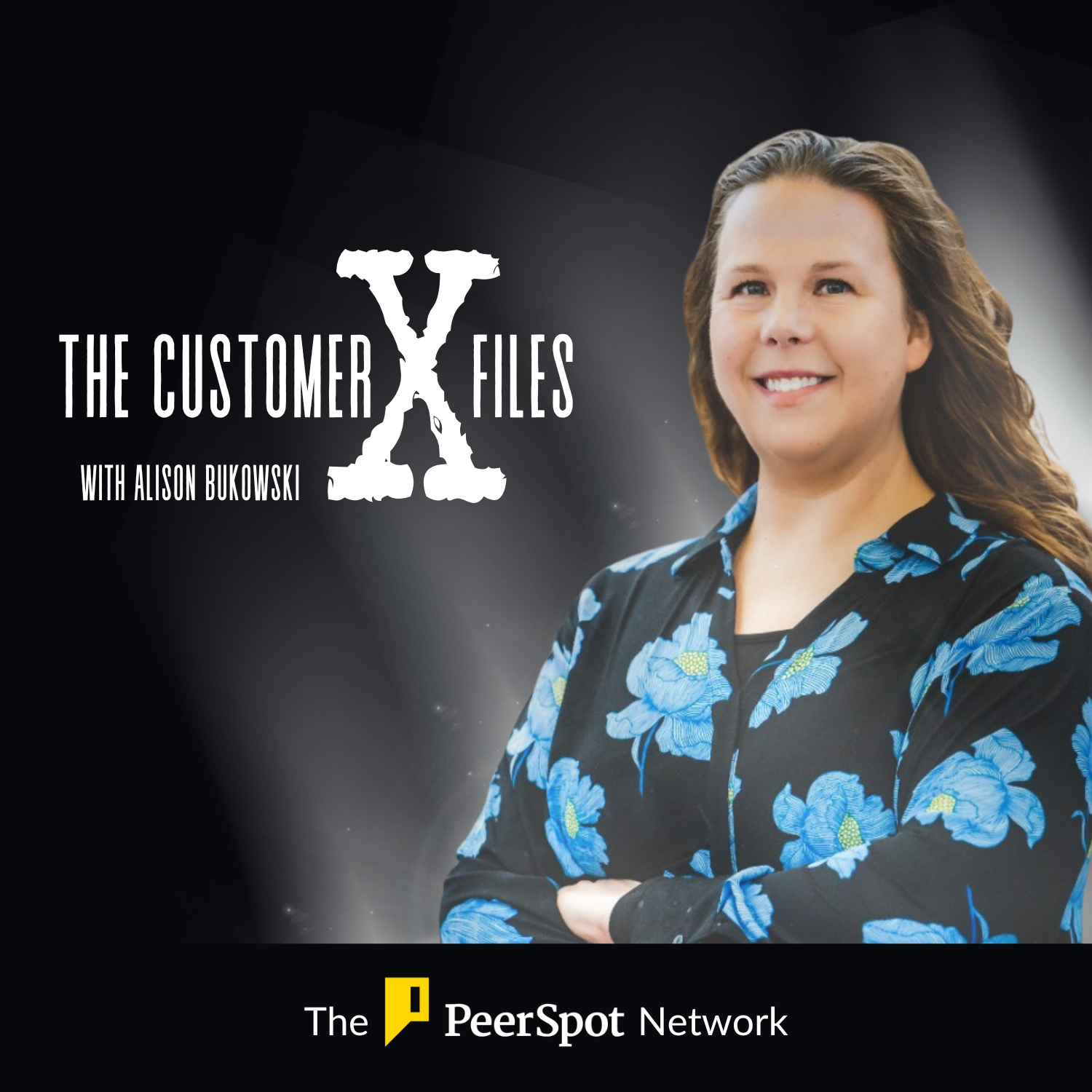
- The CustomerX Files
- Beating the Drum
- The Next CMO
- State of Customer Story Telling
- CHAOSS Community podcast
- Lenny's Great Podcast on Growth Marketing
- The Advocacy Channel
The CustomerX Files
Beating the Drum
The Next CMO
State of Customer Story Telling

Maria Braune - Be a Therapist for Your Customers
In this episode of the State of Customer Storytelling podcast, DailyPay Director of Client Advocacy Maria Braune shares how to truly listen to your customers and get the best testimonials possible.
Listen »
Jeff Loeb - Bring Your Customer Insights to the Table
In this episode of the State of Customer Storytelling podcast, Chief Outsiders Partner and CMO Jeff Loeb shares how to gather customer insights and share them with the rest of your team.
Listen »
Valeria Gomez – Be Your Customer’s Biggest Advocate
In this episode of the State of Customer Storytelling podcast, Airtable Customer Marketing Programs lead Valeria Gomez shares how to show love to your customers the way you want them to show love to your company.
Listen »
CHAOSS Community podcast

Episode 133: Until Next Time
Thank you to the folks at Sustain for providing the hosting account for CHAOSSCast!
CHAOSScast – Episode 133
In this episode we put a formal pause on the CHAOSScast podcast and celebrate our memories of working on this special project.
Before you listen to Georg, Alice, Harmony, and Maryblessing share some of the podcast history and happy moments, we'd like to let you know a bit more about why the podcast is stopping for now.
CHAOSScast will be taking an indefinite break, and we have no current plans to restart it. Producing the podcast has been a rewarding experience, and we’re grateful to everyone who listened, contributed, and joined us in conversation over the years. At this time, however, we have not been able to determine that the podcast is delivering enough value to the community to justify the time and financial resources required to sustain it.
If a clear community need for the podcast emerges in the future, we would be excited to explore bringing it back in a new form. Until then, thank you for being part of the CHAOSS community that created CHAOSScast.
Hit download now to hear more!
[00:00:00] - Welcome Back Panel Intro
[00:02:19] - Podcast Pause Announcement
[00:04:03] - How CHAOSScast Began
[00:08:52] - Community Impact Highlights
[00:16:39] - Behind The Scenes
[00:19:21] - Downloads And Top Episodes
[00:22:01] - What We Are Doing Next
[00:29:26] - Value Adds And Gratitude
[00:34:27] - Final Farewell For Now Host
Harmony Elendu Panelist:
Georg Link
Alice Sowerby
Maryblessing Okolie Links:
CHAOSS
CHAOSS Project X
CHAOSScast Podcast
CHAOSS YouTube
podcast@chaoss.community
CHAOSS Calendar
CHAOSS Slack
Alice Sowerby LinkedIn
Georg Link LinkedIn
Maryblessing Okolie
Harmony Elendu LinkedIn
https://alpha-omega.dev
https://eur-lex.europa.eu/eli/reg/2024/2847/oj/eng
FreeBSD.orgSpecial Guest: Maryblessing Okolie.Support CHAOSScast
Listen »
[00:02:19] - Podcast Pause Announcement
[00:04:03] - How CHAOSScast Began
[00:08:52] - Community Impact Highlights
[00:16:39] - Behind The Scenes
[00:19:21] - Downloads And Top Episodes
[00:22:01] - What We Are Doing Next
[00:29:26] - Value Adds And Gratitude
[00:34:27] - Final Farewell For Now Host
Harmony Elendu Panelist:
Georg Link
Alice Sowerby
Maryblessing Okolie Links:
CHAOSS
CHAOSS Project X
CHAOSScast Podcast
CHAOSS YouTube
podcast@chaoss.community
CHAOSS Calendar
CHAOSS Slack
Alice Sowerby LinkedIn
Georg Link LinkedIn
Maryblessing Okolie
Harmony Elendu LinkedIn
https://alpha-omega.dev
https://eur-lex.europa.eu/eli/reg/2024/2847/oj/eng
FreeBSD.orgSpecial Guest: Maryblessing Okolie.Support CHAOSScast

Episode 132: Please take the CHAOSScast Impact Survey - and we're taking a break
Thank you to the folks at Sustain for providing the hosting account for CHAOSSCast!
CHAOSScast – Episode 132
We don’t have an episode for you today, because CHAOSScast will be taking a break for a few months. During the break we will be evaluating how CHAOSScast supports the goals of the CHAOSS project. And to help us to do that, we would like to invite you to take a short survey by going to the link: https://forms.gle/zrvanrRArgzc3wDD9 The survey closes on Friday, May 15th 2026. In this short recording we go through the survey questions to get you thinking about your answers before you go ahead and take it, and first we share with you the goals of the CHAOSS project so that you have some extra context to help you answer in an informed way. CHAOSS aims to: Establish metrics and models for measuring open source community health Produce open source software and initiatives for measuring community health Develop programs for deploying metrics beyond trace data Work with global partners to shape how we understand open source community health The survey is quite short, but it’s really meaningful to helping us know how the podcast contributes to achieving CHAOSS’s goals. We are especially interested in honest feedback, even if you rarely listen. Thanks for helping. Your CHAOSS community. 00:00 Podcast Break Announcement
00:13 Why We Need Your Survey
00:28 CHAOSS Project Goals
00:53 Survey Basics and Listening Habits
01:17 How The Podcast Supports Goals
01:44 Impact on Your Actions
02:10 Importance Versus Other Sources
02:21 Unique Value and Improvements
02:42 Thanks and See You SoonSupport CHAOSScast
Listen »
We don’t have an episode for you today, because CHAOSScast will be taking a break for a few months. During the break we will be evaluating how CHAOSScast supports the goals of the CHAOSS project. And to help us to do that, we would like to invite you to take a short survey by going to the link: https://forms.gle/zrvanrRArgzc3wDD9 The survey closes on Friday, May 15th 2026. In this short recording we go through the survey questions to get you thinking about your answers before you go ahead and take it, and first we share with you the goals of the CHAOSS project so that you have some extra context to help you answer in an informed way. CHAOSS aims to: Establish metrics and models for measuring open source community health Produce open source software and initiatives for measuring community health Develop programs for deploying metrics beyond trace data Work with global partners to shape how we understand open source community health The survey is quite short, but it’s really meaningful to helping us know how the podcast contributes to achieving CHAOSS’s goals. We are especially interested in honest feedback, even if you rarely listen. Thanks for helping. Your CHAOSS community. 00:00 Podcast Break Announcement
00:13 Why We Need Your Survey
00:28 CHAOSS Project Goals
00:53 Survey Basics and Listening Habits
01:17 How The Podcast Supports Goals
01:44 Impact on Your Actions
02:10 Importance Versus Other Sources
02:21 Unique Value and Improvements
02:42 Thanks and See You SoonSupport CHAOSScast

Episode 131: Repo-Health - a tool built on CHAOSS metrics
Thank you to the folks at Sustain for providing the hosting account for CHAOSSCast!
CHAOSScast – Episode 131
In this episode of the CHAOSScast, host Georg Link sits down with guest, Elshad Humbatli, and panelists, Alice Sowerby and Adrian Edwards, to answer the question "How can CHAOSS metrics help you quickly assess the health of an open source project that you might want to use or join?"
Elshad, creator of Repo-Health, explains why he created the tool, and how he used the CHAOSS metrics to produce high-level insights on the health of an open source repo.
The conversation goes further, to discuss breaking down project activity to navigating the rise of AI-generated contributions, and dives deep into the human and technical sides of open source.
Hit download now to hear more!
[00:00:00] – The hosts introduce the episode and welcome the panelists and guest
[00:01:41] – Elshad shares how he discovered CHAOSS metrics and got inspired to build Repo Health.
[00:03:10] – A deep dive into the four pillars: activity, maintenance, community, and documentation.
[00:06:15] – The group debates how different metrics reflect project health and what “community” really means.
[00:10:07] – Elshad explains what Repo Health does and how users can benefit from it.
[00:12:00] – Discussion around the pros and cons of combining metrics into a single health score.
[00:17:01] – Exploring how context and goals shape which metrics matter using the GQM framework.
[00:21:00] – Real-world contributor experiences highlight the importance of documentation and responsiveness.
[00:23:00] – The impact of AI and LLMs on open source contributions and community dynamics.
[00:29:07] – Elshad shares future plans for Repo Health and opportunities for collaboration.
Value Adds (Picks) of the week:
[00:32:00] Gerog's pick is enjoying the in-between time after ending his last job.
[00:33:11] Alice's pick is the vernal equinox.
[00:33:58] Adrian's pick is spending time with friends and new experiences.
[00:34:35] Elshad's pick is low level language coding. Host
Georg Link Panelist:
Alice Sowerby
Adrian Edwards Guests:
Elshad Humbatli Links:
CHAOSS
CHAOSS Project X
CHAOSScast Podcast
CHAOSS YouTube
podcast@chaoss.community
CHAOSS Calendar
CHAOSS Slack
Alice Sowerby LinkedIn
Adrian Edwards LinkedIn
Elshad Humbatli LinkedIn
Georg Link Website
Repo-Health toolSpecial Guests: Adrian Edwards and Elshad Humbatli.Support CHAOSScast
Listen »
[00:32:00] Gerog's pick is enjoying the in-between time after ending his last job.
[00:33:11] Alice's pick is the vernal equinox.
[00:33:58] Adrian's pick is spending time with friends and new experiences.
[00:34:35] Elshad's pick is low level language coding. Host
Georg Link Panelist:
Alice Sowerby
Adrian Edwards Guests:
Elshad Humbatli Links:
CHAOSS
CHAOSS Project X
CHAOSScast Podcast
CHAOSS YouTube
podcast@chaoss.community
CHAOSS Calendar
CHAOSS Slack
Alice Sowerby LinkedIn
Adrian Edwards LinkedIn
Elshad Humbatli LinkedIn
Georg Link Website
Repo-Health toolSpecial Guests: Adrian Edwards and Elshad Humbatli.Support CHAOSScast
Lenny's Great Podcast on Growth Marketing

This CPO regrets that product management exists | Tom Verrilli (CPO of Whatnot)
Tom Verrilli is the chief product officer at Whatnot, a live shopping platform that’s become the fastest-growing U.S. marketplace business in history, with over $8 billion in GMV. Before joining Whatnot, Tom was CPO at Twitch and director of product growth at Twitter (during one of the most turbulent periods in the company’s history).In our in-depth conversation, we discuss:1. Why Whatnot’s product team was founded on the premise “we regret that product management exists”2. How AI is reshaping the PM role3. What Tom looks for when hiring PMs4. The shift toward senior ICs doing the work5. How AI has transformed data science at Whatnot6. Tom’s “play the accordion” mental model7. Why “hire great people and get out of their way” fails8. His biggest lessons from his time at Twitter—Brought to you by:WorkOS—Make your app enterprise-ready, with SSO, SCIM, RBAC, and moreMercury—Radically different banking, now with Command—Episode transcript: https://www.lennysnewsletter.com/p/this-cpo-regrets-that-product-management—Archive of all Lenny's Podcast transcripts: https://www.dropbox.com/scl/fo/yxi4s2w998p1gvtpu4193/AMdNPR8AOw0lMklwtnC0TrQ?rlkey=j06x0nipoti519e0xgm23zsn9&st=ahz0fj11&dl=0—Where to find Tom Verrilli:• X: https://x.com/tdrobbo• LinkedIn: https://www.linkedin.com/in/tom-robertson-042—Where to find Lenny:• Newsletter: https://www.lennysnewsletter.com• X: https://twitter.com/lennysan• LinkedIn: https://www.linkedin.com/in/lennyrachitsky/—In this episode, we cover:(00:00) Introduction(02:40) “We regret that product management exists”: what it means and why(08:30) When specialization makes sense, and when it doesn’t(15:20) How Whatnot structures its PM org(17:28) What 31,832 PM applications revealed about the function(19:40) How to develop systems thinking(22:10) The shift to senior ICs doing IC work(32:26) Advice for PMs struggling in today’s market(35:22) How AI has transformed work at Whatnot(41:14) The data scientist problem(42:48) Which roles are trending up and down(44:48) What the product team of the future looks like(46:29) Why core PM skills are the most durable in an AI world(49:23) How to get the most out of the people you hire(53:32) Navigating the CPO-founder relationship(57:34) Advice for aspiring CPO’s(59:16) How to know when to stand firm and when to step back(01:01:38) Play the accordion: balancing strategic vision with fast iteration(01:06:35) Agentic commerce vs. live commerce(01:09:46) Lessons from Twitter(01:13:07) Failure corner(01:15:45) Lightning round and final thoughts—Referenced:• Whatnot: https://www.whatnot.com• Building, and Whatnot: https://www.linkedin.com/pulse/building-whatnot-tom-verrilli-bwkdc• Twitch: https://www.twitch.tv• Why Netflix is betting on systems thinkers—not specialists—in the AI era | Elizabeth Stone (CPTO): https://www.lennysnewsletter.com/p/netflix-cpto-on-ai-and-the-future• Peter Bailis on LinkedIn: https://www.linkedin.com/in/pbailis• Mike Krieger on LinkedIn: https://www.linkedin.com/in/mikekrieger• Anthropic’s CPO on what comes next | Mike Krieger (co-founder of Instagram): https://www.lennysnewsletter.com/p/anthropics-cpo-heres-what-comes-next• Ben Kus on LinkedIn: https://www.linkedin.com/in/benkus• Henry Shi on LinkedIn: https://www.linkedin.com/in/henrythe9th• Hex Threads: https://hex.tech/product/threads• Product management theater | Marty Cagan (Silicon Valley Product Group): https://www.lennysnewsletter.com/p/product-management-theater-marty• Grant LaFontaine on LinkedIn: https://www.linkedin.com/in/grantlafontaine• Logan Head on LinkedIn: https://www.linkedin.com/in/logan-head• Emmett Shear on LinkedIn: https://www.linkedin.com/in/emmettshear• Kara Swisher on X: https://x.com/karaswisher• Jeff Bezos: Amazon and Blue Origin—Lex Fridman Podcast: https://www.youtube.com/watch?v=DcWqzZ3I2cY• Star City on AppleTV+: https://tv.apple.com/us/show/star-city/umc.cmc.2l8p785osmtmiyk64bh6tfde1• For All Mankind on AppleTV+: https://tv.apple.com/us/show/for-all-mankind/umc.cmc.6wsi780sz5tdbqcf11k76mkp7• Service NSW Mobile App: https://www.service.nsw.gov.au/services/service-nsw-mobile-app• Rudyard Kipling: https://en.wikipedia.org/wiki/Rudyard_Kipling• E-fish.com: https://www.e-fish.com—Recommended books:• The Hard Thing About Hard Things: Building a Business When There Are No Easy Answers―Straight Talk on the Challenges of Entrepreneurship: https://www.amazon.com/dp/0062273205• The Purpose Driven Church: Every Church Is Big in God’s Eyes: https://www.amazon.com/dp/0310201063• Babel: Or the Necessity of Violence: An Arcane History of the Oxford Translators’ Revolution―An Historic Fantasy of Dark Academia: https://www.amazon.com/Babel-Necessity-Violence-Translators-Revolution/dp/0063021439—Production and marketing by https://penname.co/. For inquiries about sponsoring the podcast, email podcast@lennyrachitsky.com.—Lenny may be an investor in the companies discussed.
To hear more, visit www.lennysnewsletter.com
Listen »
To hear more, visit www.lennysnewsletter.com

Anthropic’s first technical PM on token maxing, the jagged edge, and living in the future | Dianne Penn
Dianne Penn is Head of Product for Anthropic’s AI Research and Labs teams. She joined in 2023 as Anthropic’s first technical product manager, when the entire product team was five engineers, and has since helped ship every model from Claude 2 through Fable, and helped incubate Claude Code, MCP, Skills, computer use, tool use, and reasoning. Before Anthropic, she helped build Alexa’s AI at Amazon and, before that, traded high-yield bonds at JP Morgan Chase.In our in-depth conversation, we discuss:1. What Anthropic’s early days were like2. The inflection points that turned Anthropic from an underdog into the fastest-growing company in history3. How exactly Claude got so good at coding4. The eval-driven development loop her team is pioneering5. How to find joy in AI when everything is moving this fast6. Why Claude’s willingness to push back is key to its success7. Where human judgment remains irreplaceable—Brought to you by:WorkOS—Make your app enterprise-ready, with SSO, SCIM, RBAC, and moreMercury—Radically different banking, now with Command—Episode transcript: https://www.lennysnewsletter.com/p/anthropics-first-technical-pm-on—Archive of all Lenny's Podcast transcripts: https://www.dropbox.com/scl/fo/yxi4s2w998p1gvtpu4193/AMdNPR8AOw0lMklwtnC0TrQ?rlkey=j06x0nipoti519e0xgm23zsn9&st=ahz0fj11&dl=0—Where to find Dianne Penn:• LinkedIn: linkedin.com/in/dianne-na-penn—Where to find Lenny:• Newsletter: https://www.lennysnewsletter.com• X: https://twitter.com/lennysan• LinkedIn: https://www.linkedin.com/in/lennyrachitsky/—In this episode, we cover:(00:00) Introduction(02:31) Early Anthropic days(08:55) Big milestones(13:50) Inside the exponential(20:02) Token maxing(23:30) Anthropic Labs and the incubation model(27:30) How the research role works(31:35) How to become a top researcher(35:18) Frontier model safeguards(39:38) Hiring in the AI era(44:16) Building an eval set(47:48) Evals vs PRDs(49:55) The importance of hands-on leadership(52:46) Finding joy in AI(58:10) How Dianne uses Claude(01:01:05) Avoiding overreliance on AI(01:03:50) The constitution that makes Claude better(01:07:11) AI writing and verification(01:11:40) Where human brains will continue to be valuable(01:14:10) Navigating AI with kids(01:16:26) Alignment, the future of the PM role, and burnout(01:21:54) Lightning round and final thoughts—Referenced:• Anthropic: https://www.anthropic.com• Golden Gate Claude: https://www.anthropic.com/news/golden-gate-claude• Dario Amodei’s website: https://darioamodei.com• Scaling Laws and Interpretability of Learning from Repeated Data: https://www.anthropic.com/research/scaling-laws-and-interpretability-of-learning-from-repeated-data• Tokenmaxxing: How Top Builders Use AI To Do The Work Of 400 Engineers: https://www.ycombinator.com/library/Pa-tokenmaxxing-how-top-builders-use-ai-to-do-the-work-of-400-engineers• Garry Tan on X: https://x.com/garrytan• Anthropic co-founder on quitting OpenAI, AGI predictions, $100M talent wars, 20% unemployment, and the nightmare scenarios keeping him up at night | Ben Mann: https://www.lennysnewsletter.com/p/anthropic-co-founder-benjamin-mann• Anthropic’s CPO on what comes next | Mike Krieger (co-founder of Instagram): https://www.lennysnewsletter.com/p/anthropics-cpo-heres-what-comes-next• Introducing Labs: https://www.anthropic.com/news/introducing-anthropic-labs• Louis CK | about airplane Wi Fi: https://www.youtube.com/watch?v=me4BZBsHwZs• What happens after coding is solved? | Fiona Fung (Manager of the Claude Code and Cowork Teams): https://www.lennysnewsletter.com/p/building-the-most-ai-pilled-engineering• The Anthropic Hive Mind: https://steve-yegge.medium.com/the-anthropic-hive-mind-d01f768f3d7b• How to build a company that withstands any era | Eric Ries, Lean Startup author: https://www.lennysnewsletter.com/p/how-to-build-a-company-that-withstands• Fallout on Prime Video: https://www.amazon.com/dp/B0CN4GGGQ2• Fallout (video game): https://fallout.bethesda.net• Claude Tag: https://www.anthropic.com/news/introducing-claude-tag—Recommended books:• Crucial Conversations: Tools for Talking When Stakes Are High: https://www.amazon.com/dp/0071771328• How to Raise an Adult: Break Free of the Overparenting Trap and Prepare Your Kid for Success: https://www.amazon.com/How-Raise-Adult-Overparenting-Prepare/dp/1627791779• Incorruptible: Why Good Companies Go Bad... and How Great Companies Stay Great: https://www.amazon.com/dp/B0FWZZBPZB—Production and marketing by https://penname.co/. For inquiries about sponsoring the podcast, email podcast@lennyrachitsky.com.—Lenny may be an investor in the companies discussed.
To hear more, visit www.lennysnewsletter.com
Listen »
To hear more, visit www.lennysnewsletter.com

Why Netflix is betting on systems thinkers—not specialists—in the AI era | Elizabeth Stone (CPTO)
Elizabeth Stone is the Chief Product and Technology Officer (CPTO) at Netflix, where she oversees Engineering, Product, and Design. Since her first appearance on the podcast two years ago—which remained my second-most-popular episode for more than a year—she has expanded her role to lead product, in addition to engineering. Before Netflix, Elizabeth was VP of Science at Lyft, Chief Operating Officer at Nuna, an economist at Analysis Group, and a trader at Merrill Lynch.In our in-depth conversation, we discuss:1. Why “systems thinking” is now the most important skill she looks for2. How to manage the flood of AI-generated output without losing quality or signal3. How Netflix thinks about AI fluency as a universal expectation rather than a level-specific skill4. What “excellence as an operating system” means—Brought to you by:WorkOS—Make your app enterprise-ready, with SSO, SCIM, RBAC, and more: https://workos.com/lennyMercury—Radically different banking, now with Command: https://mercury.com/command?utm_source=lennys&utm_medium=sponsored_newsletter&utm_campaign=26q3_brand_campaign—Episode transcript: https://www.lennysnewsletter.com/p/netflix-cpto-on-ai-and-the-future—Archive of all Lenny's Podcast transcripts: https://www.dropbox.com/scl/fo/yxi4s2w998p1gvtpu4193/AMdNPR8AOw0lMklwtnC0TrQ?rlkey=j06x0nipoti519e0xgm23zsn9&st=ahz0fj11&dl=0—Where to find Elizabeth Stone:• LinkedIn: https://www.linkedin.com/in/elizabeth-stone-608a754—Where to find Lenny:• Newsletter: https://www.lennysnewsletter.com• X: https://twitter.com/lennysan• LinkedIn: https://www.linkedin.com/in/lennyrachitsky/—In this episode, we cover:(00:00) Introduction(02:25) AI and role confusion: the storming phase before the forming phase(07:36) How roles have changed in the past two and a half years(11:55) Will functions survive? The case for craft specialism(13:26) What Netflix is hiring more of—and less of(17:22) Why systems thinking is the rising skill across every function(20:20) Is the design process dead?(22:08) Skills trending down(28:33) AI fluency and Netflix’s career ladder overlay(31:00) AI use cases beyond coding(35:12) Netflix’s AI history(38:36) Excellence as an operating system(41:11) The pillars of the excellence OS(46:41) The keeper’s test—and why it’s mostly a positive conversation(50:21) Attracting top talent in the age of frontier AI labs(52:54) Junior talent, craft mastery, and the mentorship question(56:25) Where engineering goes in 5 to 10 years(59:45) The future of entertainment: beyond film and TV(1:02:18) AI in Hollywood: Netflix’s creator-enablement position(1:06:15) Lightning round and final thoughts—Referenced:• How Netflix builds a culture of excellence | Elizabeth Stone (CTO): https://www.lennysnewsletter.com/p/how-netflix-builds-a-culture-of-excellence• Brian Chesky’s new playbook: https://www.lennysnewsletter.com/p/brian-cheskys-contrarian-approach• The design process is dead. Here’s what’s replacing it. | Jenny Wen (head of design at Claude): https://www.lennysnewsletter.com/p/the-design-process-is-dead• Claude Code: https://www.anthropic.com/product/claude-code• Claude Cowork: https://www.anthropic.com/product/claude-cowork• Netflix’s “Keeper Test” and Why You Need It | Lorne Rubis: https://www.highlights.lornerubis.com/2015/08/the-netflix-keeper-test-and-the-courage-to-take-it• Innovation for Filmmaking, By Filmmakers: Why InterPositive Is Joining Netflix: https://about.netflix.com/en/news/why-interpositive-is-joining-netflix• InterPositive: https://weareinterpositive.com• Netflix Prize: https://en.wikipedia.org/wiki/Netflix_Prize• Quarterback on Netflix: https://www.netflix.com/title/81482895• The Bill Simmons Podcast on Netflix: https://www.netflix.com/title/82186214• Spencer Pratt on Instagram: https://www.instagram.com/spencerpratt• Salman Rushdie’s Substack: https://salmanrushdie.substack.com• Remarkably Bright Creatures on Netflix: https://www.netflix.com/title/81911351• Eight Sleep: https://www.eightsleep.com• Tour de France: https://www.letour.fr/en—Recommended books:• Thinking in Systems: https://www.amazon.com/Thinking-Systems-Donella-H-Meadows/dp/1603580557• Into Thin Air: A Personal Account of the Mt. Everest Disaster: https://www.amazon.com/Into-Thin-Air-Personal-Disaster/dp/0385494785• Liar’s Poker: https://www.amazon.com/Liars-Poker-Norton-Paperback-Michael/dp/039333869X—Production and marketing by https://penname.co/. For inquiries about sponsoring the podcast, email podcast@lennyrachitsky.com.—Lenny may be an investor in the companies discussed.
To hear more, visit www.lennysnewsletter.com
Listen »
To hear more, visit www.lennysnewsletter.com
The Advocacy Channel

Fraud-Proofing Your Referral Program with Mariana Doncel
What happens when your referral program participants are literally trained to find holes in systems? How do you protect your program without making it so complicated that nobody wants to use it?
To explore this, we welcome Mariana Doncel to The Advocacy Channel. Mariana leads B2C product marketing at Hack the Box, a cybersecurity training platform where users learn ethical hacking through hands-on challenges. When your customers spend their days breaking into systems for fun, you learn pretty quickly what actually works for fraud prevention.
In this episode, Mariana and host Will Fraser get into the reality of protecting your referral program from abuse. Spoiler: it's not about building an airtight system with rules for every scenario. Mariana shares the pragmatic approach Hack the Box has taken, focusing on damage control and smart incentive design rather than trying to prevent every possible exploit.
In this episode, Mariana walks us through:
Why trying to close every possible loophole often backfires by making your program too complex for legitimate users
The "accept and mitigate" approach: acknowledging that some people will try to game the system while capping your exposure
How tying rewards to actual monetary actions creates natural fraud deterrence
Setting per-person limits so even if someone does find a workaround, the damage is contained
Thinking about fraud prevention as risk analysis rather than absolute protection
How to balance moving fast with protecting your program from abuse
Mariana also shares how this mindset extends beyond referral programs to everything her marketing team puts out at Hack the Box, where every campaign has to account for users who will look for alternative interpretations.
Connect with Mariana on LinkedIn: https://www.linkedin.com/in/marianadoncel/
Connect with us:
Get more customer marketing insights and strategies at impact.com/blog/
Connect with host Will on LinkedIn: www.linkedin.com/in/wifraser/
Have a question? Suggestion? Email us at advocacychannel@impact.com
Loving this show? Explore impact.com's other podcasts packed with insights:
The Partnership Economy
The Publisher's Playbook
Listen »

Building High-Impact Customer Advisory Boards with Cate Vanasse
Want to build a customer advisory board that actually drives business value? Struggling to figure out where to start or how to prove the ROI?
To help, we welcome Cate Vanasse to The Advocacy Channel. Cate leads customer marketing at TalkDesk, where her team's mission is "igniting raving fans, driving growth, and building customers for life."
With extensive experience building and scaling customer advisory boards across multiple companies, Cate shares her practical framework for creating CABs that strengthen relationships, influence revenue, and create real brand advocates.
In this episode, Cate walks us through:
How to identify the right CAB members by balancing ideal account logos with the right human personalities in the room
The art of balancing "give vs get" so it doesn't feel transactional
Why in-person meetings matter for executive CABs versus when virtual works better for technical advisory boards
Cate also shares insights from TalkDesk's CX Innovators Awards program, including how industry recognition has helped customers get promoted and secure internal resources.
Her closing advice? The best customer marketing programs don't start with a spreadsheet. They start with empathy.
Connect with Cate on LinkedIn: https://www.linkedin.com/in/catevanasse/
Connect with us:
Get more customer marketing insights and strategies at impact.com/blog/
Connect with host Will on LinkedIn: http://www.linkedin.com/in/wifraser/
Have a question? Suggestion? Email us at advocacychannel@impact.com
Loving this show? Explore impact.com's other podcasts packed with insights:
The Partnership Economy
The Publisher's Playbook
Listen »

Product-Led Advocacy with Ashley Stead
Want your referral program to succeed?
Start with the foundation first. Make sure your product infrastructure is solid and can handle growth before you launch.
In this episode, we're excited to welcome Ashley Stead, Director, Growth Product at Nesto Group, a leading Canadian tech company building the mortgage ecosystem of the future. With over 15 years of experience spanning product management, UX research, marketing, and operations, Ashley brings a unique full-stack perspective to customer marketing and advocacy initiatives.
In this episode, Ashley and our host Will Fraser dive into what it means to think about advocacy as infrastructure rather than one-off campaigns. Ashley shares her framework for creating product-led advocacy programs that integrate seamlessly into the customer journey.
From understanding the "micro-yeses" approach to breaking down complex customer paths, to navigating build vs. buy decisions and fostering collaboration between marketing and development teams, this conversation is packed with practical insights.
In this episode, you'll discover:
How to map customer journeys and identify the right moments for advocacy messaging without competing with other business priorities.
The framework for deciding when to build custom solutions versus buying existing platforms, and how to create hybrid approaches.
Strategies for empowering marketing teams to move quickly while keeping technical infrastructure robust and scalable.
The importance of breaking down big conversions into micro-yeses and understanding the data behind each step.
How to use AI tools and prompts to become more full-stack in your marketing role, even without technical resources.
Listen to this episode to hear more about how infrastructure thinking can transform your advocacy programs and help you avoid the common mistakes marketers make with referral programs.
Connect with Ashley on LinkedIn: https://www.linkedin.com/in/ashley-stead/
AI prompt from Ashley: The Advocacy Channel | Season 2 Episode 9 AI Prompt
Connect with us:
Get more customer marketing insights and strategies at impact.com/blog/
Connect with host Will on LinkedIn: http://www.linkedin.com/in/wifraser/
Have a question? Suggestion? Email us at advocacychannel@impact.com
Loving this show? Explore impact.com's other podcasts packed with insights:
The Partnership Economy
The Publisher's Playbook
Listen »


![Episode 69: Community Insights with Hedan Zeng [Part 2 of 2]](https://assets.fireside.fm/file/fireside-images/podcasts/images/f/f5b24404-14da-4b82-8a25-6de95d2b991b/episodes/f/f6c7d48f-e3e2-43f6-9ed3-13f5be591865/cover.jpg)
![Episode 68: Community Insights with Hedan Zeng [Part 1 of 2]](https://assets.fireside.fm/file/fireside-images/podcasts/images/f/f5b24404-14da-4b82-8a25-6de95d2b991b/episodes/f/fd4f583a-ce18-42a3-922a-a962bbc78f5f/cover.jpg)